Why Wizora Studio Is Reshaping the Modern Web Design Agency Model
Quick answer: the modern web design agency model is an integrated product-studio approach that combines high-end UI/UX, modern front-end architectures, and built-in AI automation to deliver fast, secure, conversion-focused web products. This article is for product leaders, founders, and marketing teams evaluating an agency partner and looking for a practical guide to how the model works, what it includes, and how to implement it for startups, scale-ups, or enterprises.
The Failure of Traditional Agencies (Short Overview)
Traditional agency models often fail to meet modern expectations because they separate design and engineering, rely on legacy stacks, and move slowly. Common pain points include:
- Outdated technology: Many teams still use monolithic CMS setups that limit performance and customization.
- Slow time-to-market: Layered approvals and poor coordination turn simple updates into protracted projects.
- Design-to-development gaps: Beautiful Figma files become compromised during handoff, creating inconsistency and technical debt.
- Operational fragility: Websites that aren’t connected to business workflows create manual overhead and missed opportunities for automation.
Wizora Studio was founded to address these gaps by unifying design, engineering, and automation into a single workflow that prioritizes speed, performance, and measurable business outcomes.
What the Modern Web Design Agency Model Includes — Components and Architecture
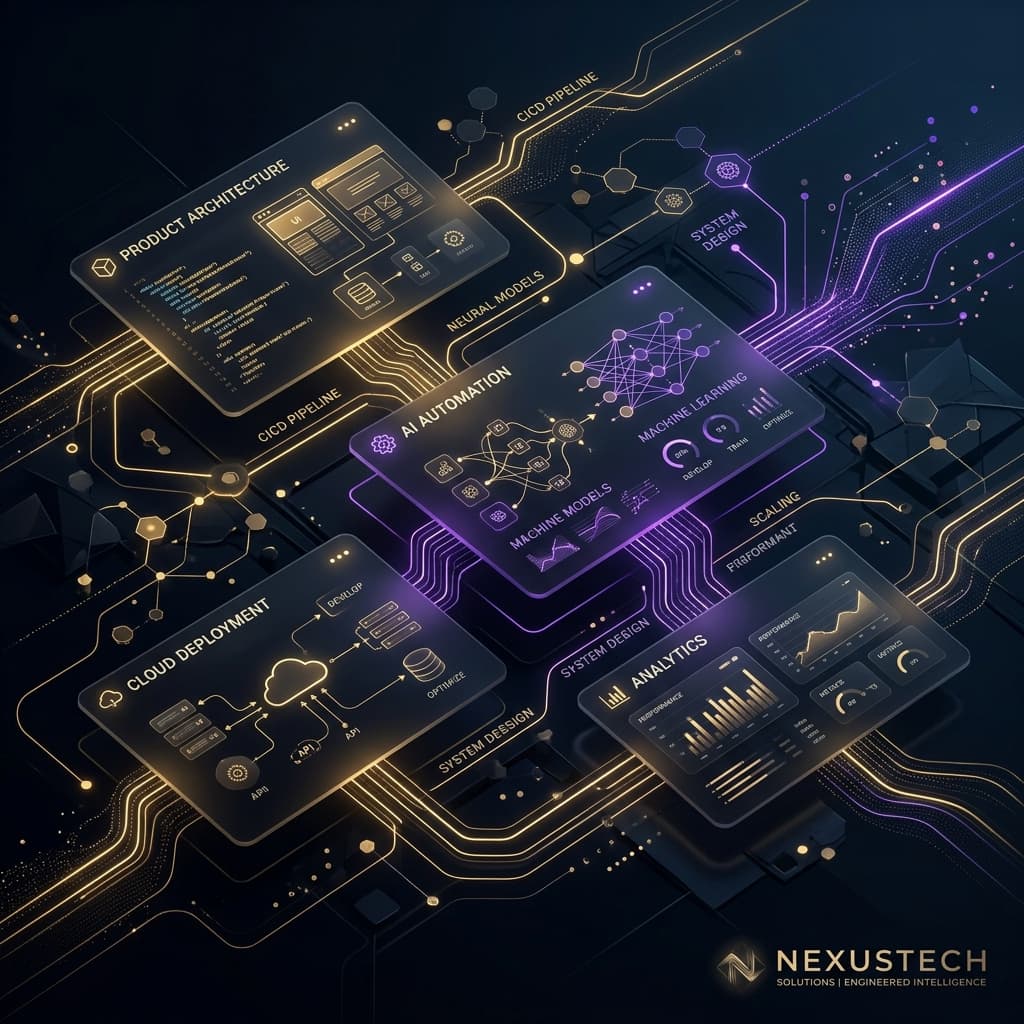
The modern model replaces silos with a modular, repeatable architecture. Key components are:
- Modern front-end framework: Custom projects built with Next.js for hybrid SSR/SSG, edge rendering, and optimal SEO.
- Design system and UI/UX: Reusable components, accessible color systems, and finely tuned micro-interactions driven by a UI library and design tokens — see our UI/UX service.
- Performance-first styling: Tailwind CSS or scoped vanilla CSS for predictable runtime size and fast paint times.
- CI/CD and edge deployment: Automated builds and edge hosting (Vercel or equivalent) for reliable global delivery.
- Automation and AI integration: Built-in workflows for lead capture, conversational agents, and downstream CRM automation via our AI Automation services.
- Observability and quality: Automated tests (unit, e2e), performance budgets, monitoring, and error tracking.»
How the Modern Web Design Agency Model Works — Practical Workflow
Below is a condensed, practical workflow that shows how projects move from idea to production under this model:
- Discovery & product alignment: Define goals, KPIs, audiences, and technical constraints with stakeholders.
- Design sprint & prototypes: Rapid UI/UX explorations, interactive prototypes, and usability validation. We iterate until the experience meets conversion and accessibility goals.
- Design system & componentization: Convert approved screens into a living design system with tokens and reusable components to guarantee consistency.
- Engineering & staging: Implement with Next.js, connect APIs, add automated tests, and deploy to staging for stakeholder review.
- Integrations & automation: Implement form-to-CRM flows, chat agents, and scheduled workflows — for example using our workflow automation and AI agents.
- Launch & measurement: Promote to production, validate performance and analytics, and enforce performance budgets.
- Iterate & operate: Continuous improvements, A/B tests, and retained support to evolve the product with data.
Implementation: Tools, Checklist, and Best Practices
Implementation choices matter. Use this checklist when evaluating or building a modern web design agency model.
- Design tools: Figma with component libraries and versioned design tokens.
- Front-end stack: Next.js, Tailwind CSS (or scoped CSS), Framer Motion for animations.
- Testing & quality: Storybook, Jest, Playwright or Cypress, and visual regression testing.
- Deployment: Edge-first hosting, Git-based CI/CD, and atomic deploys.
- Analytics & monitoring: Real user monitoring, performance audits (Lighthouse), and error tracking.
- Automation & integrations: Secure APIs to CRM, email, and conversational AI platforms; consider RAG-based knowledge systems for support agents (RAG knowledge base).
- Accessibility: Contrast checks, semantic markup, keyboard navigation, and reduced-motion preferences built into components.
Best practices include enforcing a single source of truth (component library), continuous design–engineering reviews, automated performance budgets, and treating security and privacy as first-class requirements.
Example Workflow (Practical Case)
A typical engagement might start with a seed-stage SaaS that needs a performant marketing site plus an MVP dashboard. We begin with a two-week discovery, map core user journeys, then run a focused design sprint to validate conversion flows. While designers finalize the UI system, engineers scaffold a Next.js app with Storybook components. We wire form submissions to a secure Firestore or CRM, set up conversational AI for support, and deploy to an edge network for real-user performance testing. Post-launch we iterate on funnels and accessibility improvements. For a detailed example of our process, see our work gallery and case studies at Wizora Studio — Work.
Benefits, Limitations, Risks, Security, and Performance Considerations
- Benefits: Faster time-to-value, consistent brand experiences, measurable conversion gains, and integrated automation that reduces operational load.
- Limitations: Higher initial engineering discipline is required to build a reusable design system; the approach requires collaboration and upfront investment in automation and observability.
- Risks: Potential vendor lock-in to specific frameworks or hosting providers and the usual third-party dependency risks. Mitigation: clear export paths for data and components, documented APIs, and code ownership terms.
- Security: Adopt secure authentication, least-privilege API keys, encrypted data flows, and regular dependency audits. Treat compliance requirements (e.g., GDPR) as part of the discovery phase.
- Performance: Enforce performance budgets, use edge caching, optimize images and fonts, and rely on server-side rendering where it improves perceived load times and SEO.
Cost and Timeline Expectations
Project cost and timeline depend heavily on scope, integrations, and required compliance. Instead of fixed numbers, evaluate providers by their ability to define a clear scope of work, break the project into prioritized milestones, and provide a transparent change-order process. If you want a realistic assessment tailored to your product, request a free audit via Contact.
How to Choose a Provider and Next Steps for Business Teams
When evaluating agencies for a modern web design agency model, ask for:
- Examples of design systems and living component libraries (not one-off pages).
- Evidence of full-stack architecture decisions (Next.js, deployment model, observability).
- Demonstrated integrations with automation and AI tooling.
- Clear post-launch support and iteration plans.
At Wizora Studio we combine premium UI/UX practice with modern engineering and AI automation. If you want a practical review, start a conversation on scope and options at Contact or review our portfolio at Work.
FAQ: Common Questions about the Modern Web Design Agency Model
How does the modern web design agency model work?
It unites discovery, adaptive UI/UX design, component-driven engineering, and automated operations into an iterative pipeline that ships high-quality web products faster than traditional waterfall agencies.
What are the main benefits?
Faster delivery, consistent product quality, better SEO and performance, and integrated automation that reduces manual workflows and improves conversion funnels.
What are the biggest risks and how are they mitigated?
Risks include vendor lock-in, dependency on third-party services, and underestimating maintenance needs. Mitigations are contractual export guarantees, documented architecture, and clear operational SLAs.
How do I implement this model for my startup?
Start with a discovery to define KPIs, then prioritize a minimal viable design system and automation flows. Choose partners who can deliver both design and engineering or who will collaborate in a single integrated workflow. Our UI/UX and AI Automation services are built for this approach.
Can this model scale for enterprises?
Yes. The architecture is modular: design systems and component libraries scale horizontally, and edge deployments plus robust CI/CD pipelines support enterprise traffic and compliance needs.
Conclusion — How Wizora Studio Connects This Model to Your Business
Modern web design agency model means moving from siloed deliverables to a product-first studio that owns design, code, and automation. Wizora Studio combines premium UI/UX craftsmanship, Next.js engineering, and AI-driven workflows to help teams ship faster with fewer compromises. To explore how this model maps to your product roadmap, see our UI/UX services, review examples in Work, or start a conversation via Contact.